Maria Leonora “Lei” Apostol likes to begin her day in silence. At 5 a.m., before the rush of meetings and airport operations, she takes a few minutes to reflect, scribble down thoughts, and then head out for a run or walk her dogs. It’s a routine shaped by years of discipline as a competitive runner and by a career that has taken her from hotels and luxury resorts to the skies.
That same grounding now guides her work as the Vice President for Customer Service Operations at Cebu Pacific. “My division is responsible for the airline’s passengers from the first moment that they arrive at the airport. When they get processed, take the flight, land in their destination, pick up their bags, and then get out of the airport. It's really all about looking after our passengers on a day-to-day basis.”
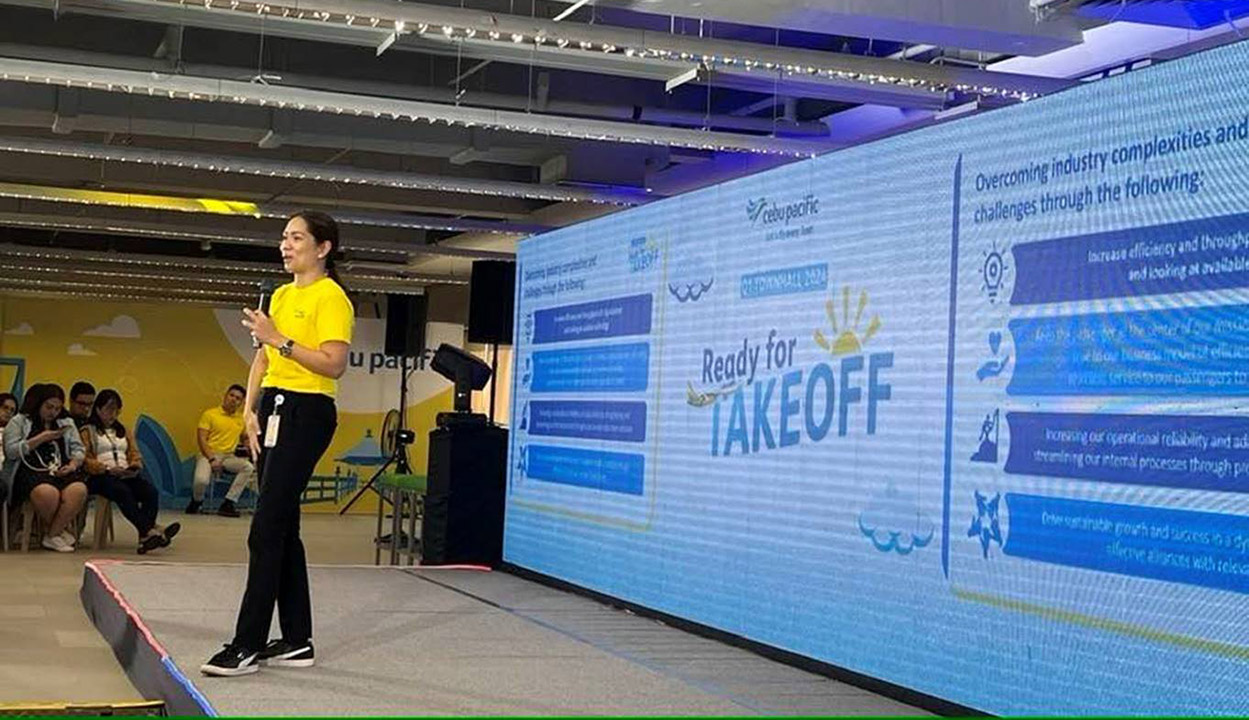
With more than 2,500 staff across airport and cabin services under her wing, Lei’s focus is clear: ensuring passengers feel cared for, especially when travel doesn’t go as planned.
To help achieve this, she established the Customer Journey Management Team (CJMT), a group that cuts across functions and keeps the passenger’s perspective at the center of every decision.
As Vice President for Customer Service Operations, Lei leads the teams watching over the passenger experience on the day of travel—from the first moment they arrive at the airport, to boarding, landing, and picking up their bags. “It’s really all about looking after our passengers on a day-to-day basis.”
Lei and her team play a great role in steadying the passenger experience, especially when travel conditions change. With clear communication, empathy, and grace under pressure, she helps shape how Cebu Pacific responds to disruptions and how the airline builds trust with its customers.
A Runner’s Discipline
Lei has always carried the mindset of an athlete. Growing up surrounded by athletic cousins, she found her stride in running and competed seriously until her early 30s. One race stands out in her memory: the Blackmores Half Marathon in Sydney, where she jokes, “They fed me dust, but I loved it.”
That competitive streak has shifted from marathons to management, but the discipline remains. She draws on the same resilience she once relied on at the starting line when guiding Cebu Pacific through the daily challenges of customer service.
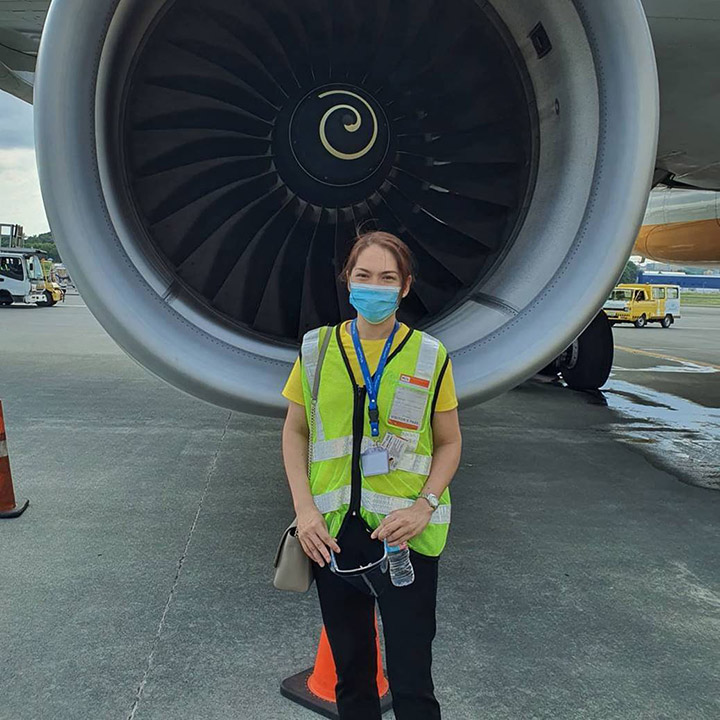
Outside of work, her energy finds lighter outlets. She practices yoga and spends time with her five German Shepherds, a breed she describes with amusement: “From two months to two years old, they’re in their raptor stage—adorable, but chaotic.”
The humor she brings to managing her dogs reflects the patience and perspective she carries into her leadership, embracing challenges with both steadiness and warmth.
Feeling Cebu Pacific’s Impact First-hand
Lei spent years in hospitality before aviation, and she has a way of framing service that feels both practical and personal. She says the “ingredients” of good customer service don’t change much across industries: building a sense of identity, clear communication, and consistency.
But her connection to Cebu Pacific didn’t start with the job offer—it started with a chapter abroad. She worked in Vietnam for two years, building hotels for a real estate development company.
That period gave her a firsthand view of what affordable, accessible travel can mean for everyday Filipinos. Her contract came with a decent airfare allowance, which, she says, would have meant flying home only two or three times a year if used on other carriers.
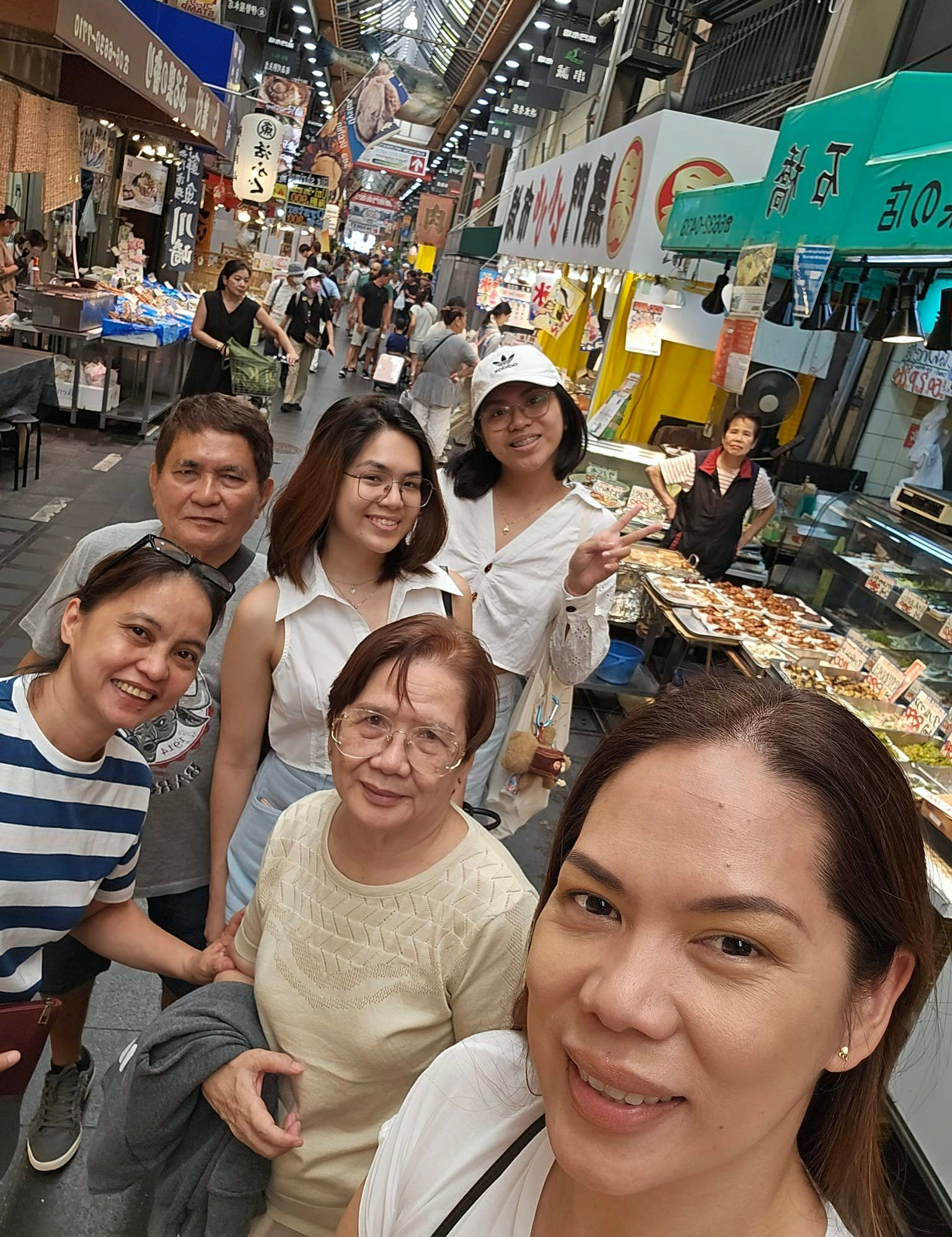
With Cebu Pacific, she could come home every month: “parang commuting lang,” she gratefully confides. Experiencing what other OFWs go through, Lei says that being away from family is hard; but thankfully, being able to go home regularly made it “not so painful.”
She also points out it wasn’t just her; many Filipinos in Vietnam felt the same, and they were rooting for Cebu Pacific to succeed because they had already seen its impact on keeping families together.
Even in her hotel-development years, Cebu Pacific showed up as a practical marker of growth. She says that when deciding where to build, one of the questions the management team always asked was simple: Does Cebu Pacific fly there? “If yes, it was a sign the destination would flourish,” she recalls.
A Fresh Start and Perspective
Lei candidly reveals that she had no intention of leaving the hospitality industry before moving to Cebu Pacific. Talking about what convinced her, she points to a straightforward conversation with Lance Gokongwei, the airline’s chairman and the head of the Gokongwei Group. When she asked why they were considering her, he said they wanted a different lens, someone from outside the airline world who could bring a fresh operating mindset. “I saw that they were agile and open to experimenting. I liked that,” says Lei.
And then came the specific challenge that tipped her over: She was asked to take one division—cabin services—and “run it like a business.”
When Lei was entrusted to run Cebu Pacific’s cabin services, she was directed to run the division “like a business.” She took it to mean that the work can’t be treated as a backstage function that only gets attention when something goes wrong. It has standards, safety, training, and customer experience all bundled together.
It’s an interesting phrase because it might sound clinical in another context, but Lei doesn’t interpret it that way. For her, Gokongwei’s directive to “run it like a business” means the work can’t be treated as a backstage function that only gets attention when something goes wrong. Cabin service is part of the product. It has standards, safety, training, and customer experience all bundled together.
Manage it well, and passengers will feel the difference. It’s the message that brought Lei fully onboard.
Clearing Turbulence
A disruption can quickly turn into a chain reaction for passengers: a delay that keeps extending, a cancellation that forces rebooking, long lines at service counters for help, a scramble for new flight options, and the uncertainty of not knowing what happens next. These situations are where customer service leadership gets tested, not in theory, but in real time, in crowded spaces, in moments when emotions run hot.
Lei describes how, during these incidents, teams naturally focus on resources: aircraft, crew, gates, and slots because those are the constraints everyone is trying to solve. In those moments, she says, passenger care must remain just as visible in the response.
“I thought there should also be the same focus [on passengers], because these are extraordinary situations,” says Lei.
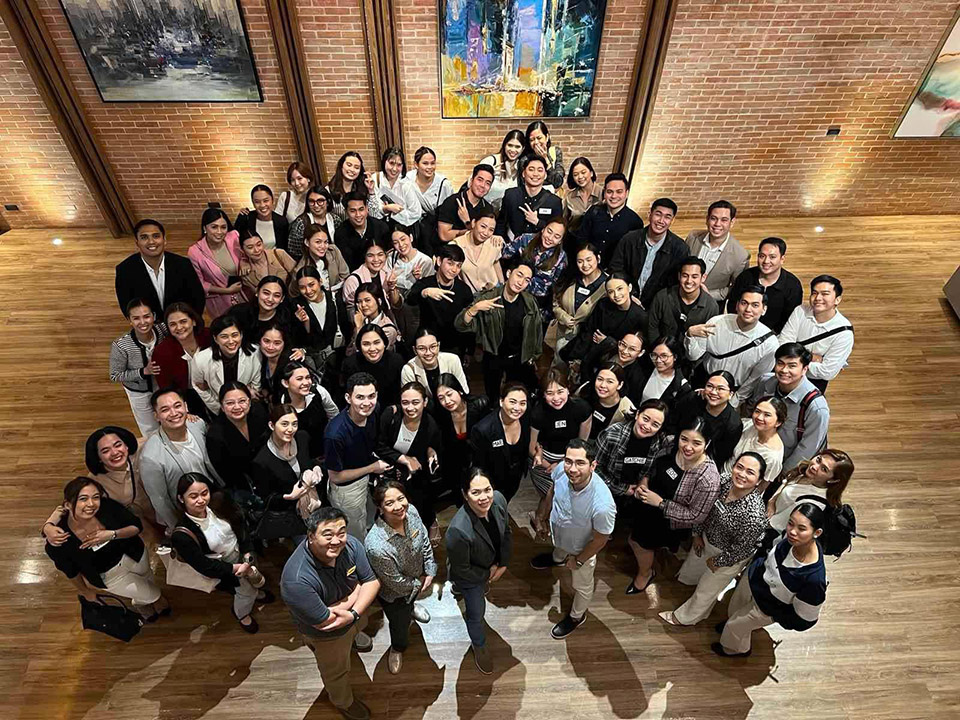
Eventually, during cross-department brainstorming sessions to address this, the idea for the Heightened Care policy took shape. With the different teams asking what “care beyond compliance” would look like in real life, a set of practices that the airline could activate during difficult periods emerged, designed to ensure that passengers are properly looked after, even beyond what is legally mandated.
One example she shares is food. If policy says passengers are entitled to meals after a certain delay threshold, she advises the crew to use their judgment earlier—especially if the delay pushes into lunchtime.
Another is when takeoffs are delayed because of conditions like red lightning alerts. She acknowledges these are force majeure situations, but her stance is: passenger care is primordial. If they’re stuck onboard for long stretches, the right thing is to provide food and beverage, if possible, most especially if there are kids or seniors.
But if there’s a single theme that runs through her disruption philosophy, it’s communication. She argues that operational fixes aren’t enough if passengers are left guessing. People want to understand what’s happening, what options they have, and what they should do next.
That thinking is part of why the Customer Journey Management Team (CJMT) matters. Lei explains that communication styles vary widely across roles: pilot, cabin crew, ground staff, and sometimes, even within the same role. Scaling “good comms” person by person is hard, so CJMT drafts consistent messaging and aligns what ground staff, cabin crew, and pilots say, so passengers don’t get mixed signals—one cause of anxiety and stress.
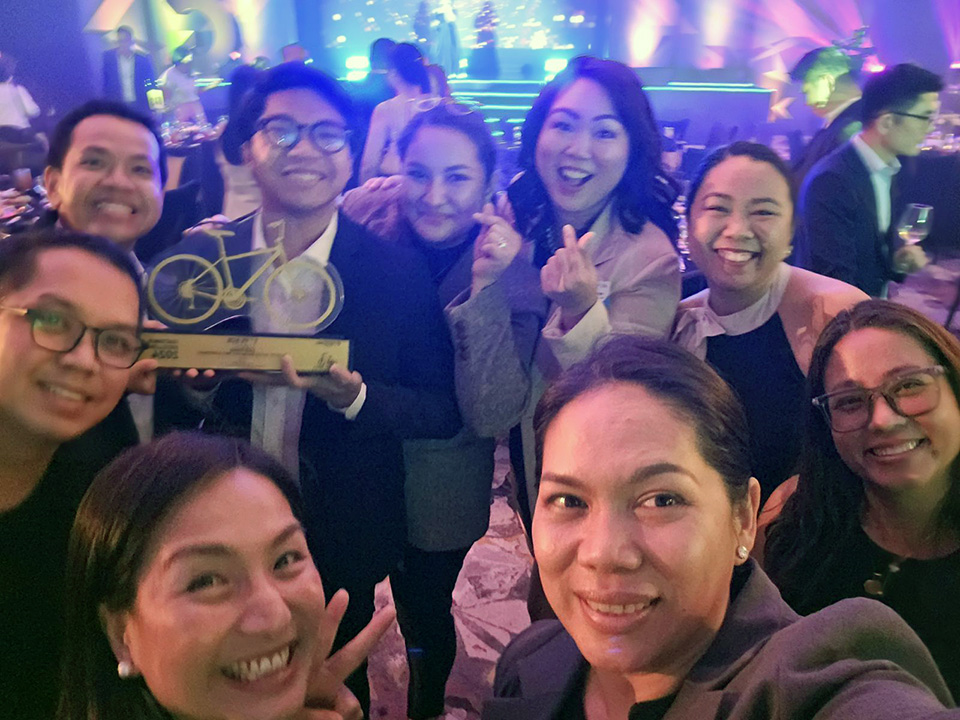
Eventually, everyone saw the benefit of having “one single source of truth.” She refers to it as a “cultural revolution” of sorts, as the airline’s various teams began to seamlessly work together as one for customers.
Cebu Pacific also measures whether these efforts are landing. Lei points to clear improvement in their customer satisfaction (CSAT) survey scores, which breaks feedback down by cabin, airports, flight deck announcements, and baggage. Since joining the airline, she’s seen scores steadily rise, even breaking all-time records. “We’ve recently seen scores higher than ever, but anything trending upwards is fantastic,” she beams.
Technology Matters
For all the intensity of disruption management, Lei’s work is not only about crisis response. A big part of it is building systems, so fewer moments become crises in the first place.
Lei says technology matters most when it makes good service scalable, especially during disruptions. She remembers being impressed early on by how Cebu Pacific was already building tools that reduce the classic “cancelled flight = line up” experience. Instead of asking passengers to queue to rebook or wait for an advisory, the airline can send a link through email or text. From there, passengers open a portal, see their options, and choose what works for them—rebook the flight or convert their booking into a CEB Travel Fund. For Lei, that’s a real game changer: mas mabilis, mas malinaw, and far more manageable when you’re supporting a growing network.
Since joining the airline, she’s seen its customer satisfaction survey (CSAT) scores steadily rise, even breaking all-time records. “We’ve recently seen scores higher than ever, but anything trending upwards is fantastic,” she beams.
She also recalls the customers’ delight (“appreciative talaga sila”) when certain self-service features were introduced—small signals that the experience is becoming easier and more modern. She’s also visibly energized by how Filipinos quickly adapt to airport tech abroad. She describes watching common-use kiosks in other countries where locals hesitate, but Filipinos quickly jump in, because if they know there’s a faster way, they’ll take it.
As she sees it, the ideal future is for passengers to do most of the pre-air travel steps at home, go to the airport, drop their bags, and fly. No more long queues, no unnecessary pain points. It might be even closer than we think.
Part of the Crew
Fittingly, for a story in this website’s People & Culture section, Lei recognizes how company culture matters as much as tech. One thing that’s always been on her mind since joining Cebu Pacific is, how do you build a service-oriented culture when much of your team doesn’t work in an office?
Unlike office-based employees, the cabin crew don’t get the usual environment where culture spreads through the typical interaction of management and staff. “Their office is the aircraft,” she notes.
Cabin crew members miss many company moments by default: they usually can’t attend Christmas parties for example, because peak periods are also their busiest duty days.

That’s why she pushed for a first-ever cabin crew gala awards night, which she calls one of her dreams for cabin services and a project “very close to my heart.”
To Lei, recognition is a practical way to reinforce values at scale, especially for teams who rarely “see” the organization the way office-based employees do.
She is careful, too, about fairness: the goal isn’t to say one group matters more than another. The point is that the measuring stick for excellence has to match the reality of the job. She explains that a perfect attendance record looks different for someone on shifting duty hours or red-eye rotations, and recognizing that difficulty is part of respecting the role.
Put all these pieces together—systems that reduce friction, policies that protect customer dignity during disruptions, communication that stays consistent under pressure, and recognition that helps company culture travel across an aircraft cabin and beyond—and a clearer picture of Lei emerges.
If you ask Lei what keeps her grounded, she goes back to her purpose. The “why”, which is the family she supports, and the lasting impact she wants to make on the country.
That’s what makes the job worth it—keeping people connected, and meaningfully contributing in quiet but many ways to the nation’s march forward.