

Employees, Customers, Suppliers, Creditors and Communities
2025 Stakeholder Engagement Results
Effective stakeholder engagement enables JG Summit to identify issues and concerns that may influence its long- term performance and resilience. By proactively consulting and collaborating with stakeholders, the company gains insights into their expectations, priorities, and emerging risks, allowing it to respond effectively and responsibly.
Incorporating stakeholder feedback into decision-making strengthens partnerships, addresses shared challenges, and drives positive, lasting impact. This engagement supports continuous improvement, aligns business strategies with societal expectations, and reinforces JG Summit’s commitment to responsible and sustainable practices.
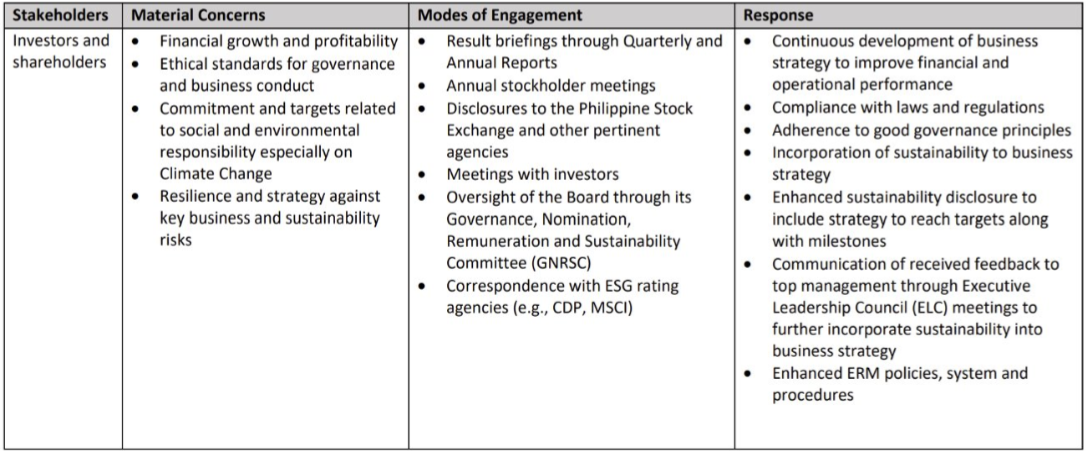
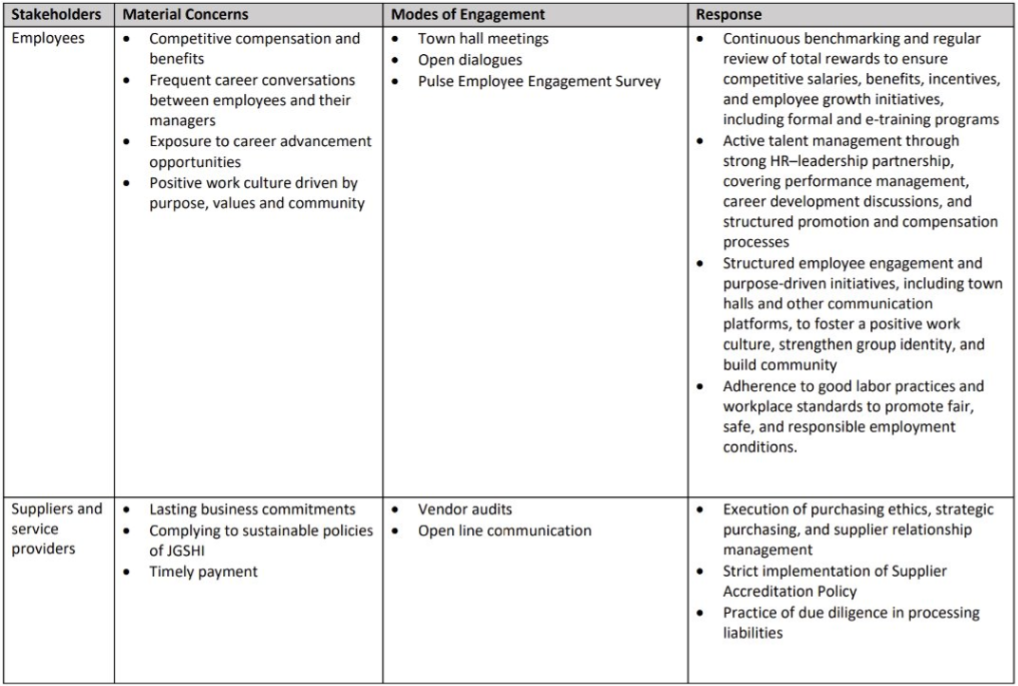
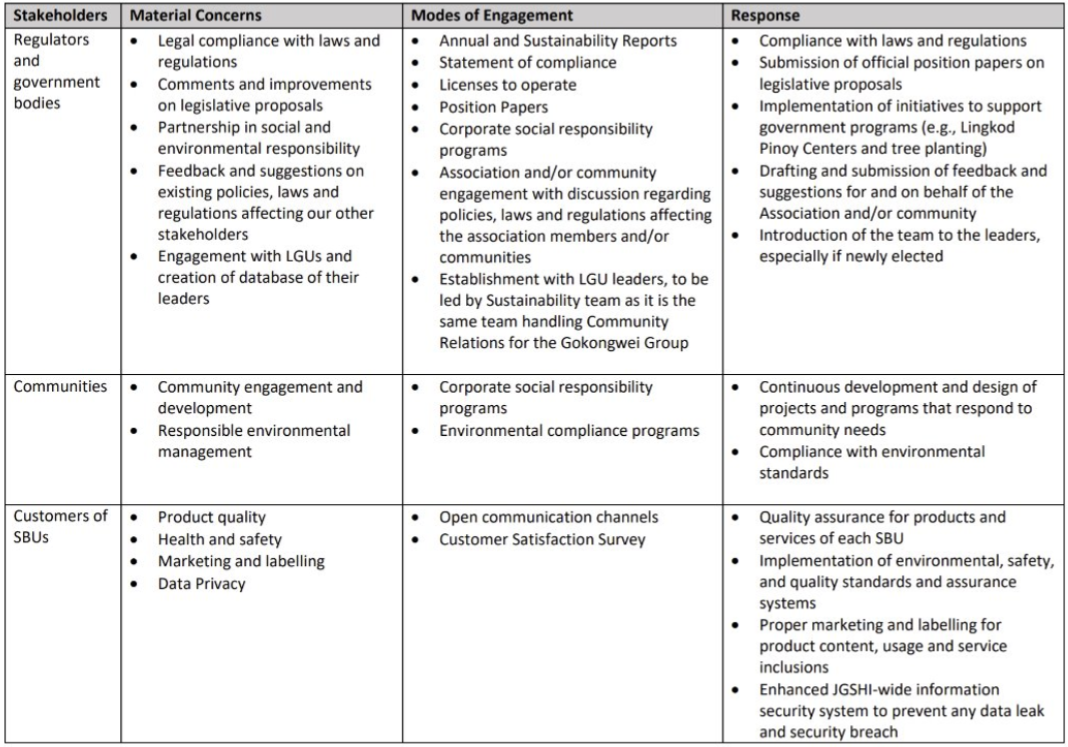
I. Employees
A. Health, Safety and Welfare
In 2025, the Company continued to strengthen its Occupational Safety and Health (OSH) programs to ensure a safe, healthy, and supportive workplace. Preventive health care remained a priority through the continued rollout of the Annual Physical Examination, free first-session mental health consultations , and access to the Rebel wellness app. To promote healthier daily routines, the Company also upgraded workplace facilities and created wellness-focused spaces. Activities such as the biannual Step Challenge and monthly well-being webinars encouraged employees to stay active and practice healthy habits.
The Company renewed its partnership with the Philippine Red Cross to conduct an on-site blood donation drive, supporting employee involvement in community health initiatives. These efforts demonstrate the Company’s commitment to providing a safe, healthy, and enabling work environment where employees can perform at their best.
B. Employee Training and Development
The Company advanced its leadership and capability-building efforts through targeted development programs that support both current and emerging leaders. The Corporate Human Resources Group delivered Leaders’ Conferences that strengthened the leadership capabilities of key functional heads across the organization, including those in the CHRO, CRO, and CFR/O roles, among others. The Executive Development Program (EDP) continued to build leadership depth through its Navigate, Orchestrate, and Win tracks. Selected leaders also participated in programs at IMD, further improving their strategic thinking and decision-making skills. In addition, Corporate Center units provided functional training programs that enhanced technical proficiency and supported everyday operational excellence. Adoption of Individual Development Plans (IDPs) reached 82% in the Corporate Center, surpassing the 75% target and demonstrating strong employee engagement in personal and professional growth. Together, these initiatives strengthened a future-ready leadership pipeline and ensured ongoing alignment with the Company’s long-term strategic priorities.
C. Rewards and Compensation Policy Aligned with Long-Term Performance
The Company affirms that strong governance is essential to long-term success. In 2025, the Company continued to strengthen its rewards framework to ensure that employee performance is aligned with long-term goals and the overall success of the Company.
Performance-Based Compensation
The Company’s rewards programs prioritize performance. This helps attract, retain, and motivate high-performing talent while ensuring everyone is accountable for long-term growth. Specifically, through the Long-Term Cash Bonus, eligible employees are rewarded based on sustained results and progress toward key business goals. As a bonus modifier, there is an additional cash incentive if the target ESG ratings from identified rating agencies are achieved on the third payout period. Notwithstanding the foregoing, the award may be cancelled or forfeited if the eligible employee violates the provisions in the agreement, is terminated for just cause, or if the award is deemed to be inconsistent with applicable laws or regulations.
Balanced Scorecard Approach
The Company uses a balanced set of measures—not just financial results—to evaluate performance. These include customer satisfaction, innovation, employee development, social responsibility, and environmental efforts. This ensures that employees contribute to the Company’s goals in a well-rounded and sustainable way.
Performance Assessment and Goal Setting
Performance management focuses on achieving the Company’s committed objectives. Employees are supported through development plans, regular feedback, and learning programs to help them perform their roles effectively. Career discussions and the year-end performance review help employees understand their achievements, areas for improvement, and long-term goals.
Transparent Communication
The Company continues to communicate clearly about performance expectations, evaluation standards, and how rewards are given. Regular communication helps employees understand how their work contributes to the Company’s long-term success and strengthens trust and accountability across the organization.
II. Customers’ Welfare
The Company adopts customer relations policies and procedures to protect the customer’s welfare. This includes providing and making available the customer relations contact information, who is empowered to address and attend to customer questions and concerns.
III. Supplier/Contractor Selection
The Company follows the Supplier Accreditation Policy to ensure that the Company’s suppliers and contractors are qualified to meet its commitments. Besides the accreditation process, suppliers and contractors also undergo orientation on Company policies and ethical practices.
Supplier Accreditation PolicyIV. Creditors
The Company honors its contracted obligations and ensures the protection of creditors’ rights. The policy is posted on its website and may be viewed at: Protection of Creditors Rights Policy.
V. Communities
The Company conducts various projects for its communities discussed in “Shared Success” of the JGS Annual and Sustainability Report SEC Form (17A).